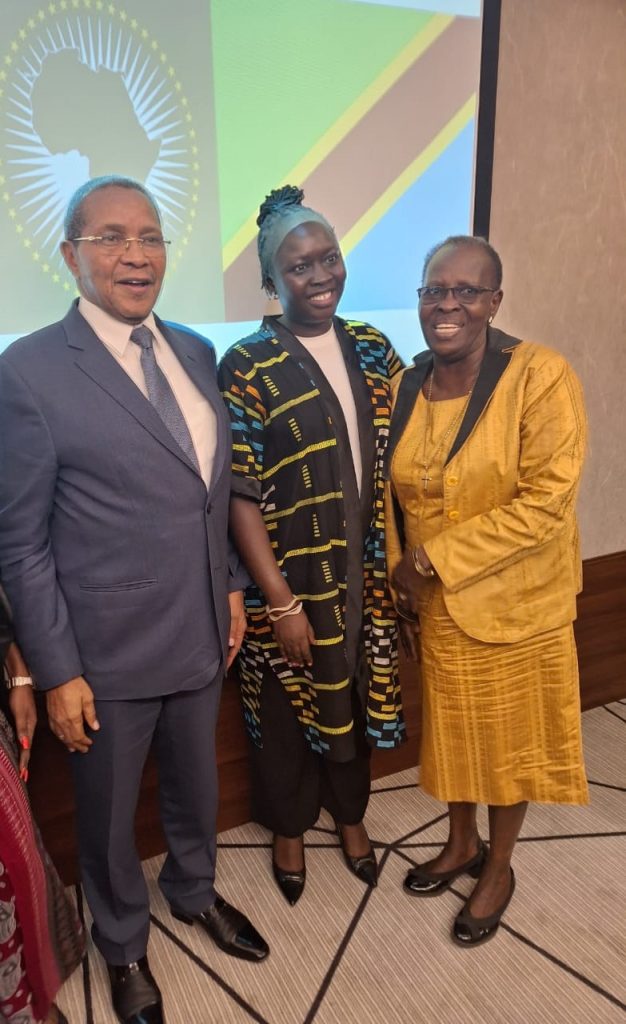
Juba, 8 April — South Sudan’s Women Mediators have taken a decisive step in shaping the country’s fragile peace trajectory, submitting a comprehensive working paper to the African Union’s High Representative for the Horn of Africa and the Red Sea, with a special focus on South Sudan’s transitional process.
Led by coordinator Lona James, the initiative reflects a growing recognition of the critical role women play in sustaining peace and influencing political outcomes. The paper outlines practical recommendations aimed at strengthening oversight, accountability, and inclusive dialogue within the ongoing transition.
At the core of the document is a call for the establishment of regular civil society observation reports to be submitted to the office of the AU High-Level Representative. These reports are intended to provide independent, ground-level assessments of progress and challenges in implementing the transitional roadmap. The mediators also emphasized the importance of sustained engagement through both virtual and in-person dialogues between civil society actors and the AU office.
This effort is anchored within the broader Civil Society–African Union Dialogue initiative on the Transitional Process, which seeks to bridge the gap between grassroots perspectives and high-level diplomatic engagement.
The working paper further highlights the evolving role of the South Sudan Women Mediators (SSWM), who, in 2025, transitioned from internal capacity-building to active political engagement with signatory parties to the Revitalized Agreement on the Resolution of the Conflict in South Sudan (R-ARCSS). Supported institutionally by the Community Empowerment for Progress Organization (CEPO), and with technical and financial backing from UN Women and the United Nations Mission in South Sudan (UNMISS), the mediators have positioned themselves as key actors in the peace process.
Their engagement with political stakeholders has been deliberate and strategic—designed not merely as symbolic participation but as a mechanism to influence behavior, encourage compliance, and reduce the risk of a return to conflict. By navigating complex political dynamics, the women mediators have demonstrated an ability to foster trust, promote dialogue, and advocate for inclusive governance.
The submission of this working paper signals a shift toward more structured and impactful civil society participation in South Sudan’s transition. It also reinforces the importance of gender-inclusive approaches in peacebuilding, particularly in contexts where sustainable stability depends on broad-based ownership of the political process.
As South Sudan continues to navigate its transitional phase, the contribution of women mediators stands as both a strategic intervention and a reminder that durable peace requires inclusive voices at every level of decision-making.
Attachment of the Full Document: https://cepo.org.ss/wp-content/uploads/2026/04/SSWM-Paper-to-H.E.-Jakaya-Kikwete-in-April-2026.docx